

FilmStack Inspiration Challenge #111
What Elizabeth Gilbert, an amateur photographer, and Working Girl taught me about creative surrender

Carolina Groppa is an Emmy-nominated producer, speaker, and podcast host helping audiences and creatives see the human side of Hollywood.
The stars aligned this week in a way that’s been all about deviating from the norm—first with my timely episode with Alan Morales, co-founder of Civil Coffee highlighting the impact of production on small businesses in LA, and now with this piece.
I was invited to participate in an ongoing ‘FilmStack Inspiration Challenge’ that invites writers in our niche but mighty community to share their recent inspirations. FilmStack is a vocal and growing community of hardworking artists, filmmakers, writers, industry professionals, fans, and critics who explore film and TV in their own newsletters.
This challenge was born from a year-long mission championed by many, including Ted Hope , to convince Substack to finally add a “Film & TV” category to the site. We’re now #13 in Rising—exciting stuff!
This is piece #111, which means folks have been contributing for 111 consecutive days. I began writing this after a very relaxing Thanksgiving holiday where every day after felt like a Sunday, so I’m very much in a season of hibernation and filling my creative well.
Here are some things that have inspired me lately:

The Consciousness of Creativity
I first read Big Magic over a decade ago and marveled at the concept that creativity visits you, knocks on your door, and beckons for an opening. Those truly tapped in are able to receive. I’ve been the lucky recipient of a few great ideas in my time, but often have lacked the time (or discipline) to grab it, nurture it, and help bring it to life. I find myself often revisiting this book and its genius ideas, which is why it was kismet to have this message visit me once again earlier this week…but this time in the form of a podcast.
The Telepathy Tapes is an independent podcast started by Ky Dickens, an award-winning filmmaker with no experience in podcasting. She’s been celebrated for her transformative documentaries that tackle complex social issues, influence public policy, and ignite cultural change. Ky followed the very instincts that she discusses in this episode and did the impossible in 2025—broke through a saturated space with her hit podcast via good ‘ol fashioned word of mouth.
Just look at this episode description:
The mystery of inspiration begs the question: is the universe conscious and using us to create a vision of its own? We turn to the mystery of inspiration. Bestselling author Elizabeth Gilbert (Eat, Pray, Love; Big Magic) offers a provocative idea: that creativity doesn’t come from us, but to us. Ideas, she argues, are conscious entities—knocking at the doors of our imagination, looking for human partners to bring them into the world. Legendary music producer and author of The Creative Act: A Way of Being, Rick Rubin echoes that sentiment, describing artists as “antennas” tuned to a universal current, catching downloads that must then be shaped by craft and discipline. And Emmy-winning showrunner Liz Feldman (Dead to Me) shares her own uncanny experiences of creative lightning striking, when a fully-formed story seemed to arrive out of nowhere.
Threaded through the episode beautifully is the creator’s own story. When she failed to launch The Telepathy Tapes as a film, she surrendered it back to the universe, only to learn the idea demanded to exist as a podcast. They discuss the idea of surrender and how that surrender, painful as it was, became the gateway.
The Award Winning Amateur
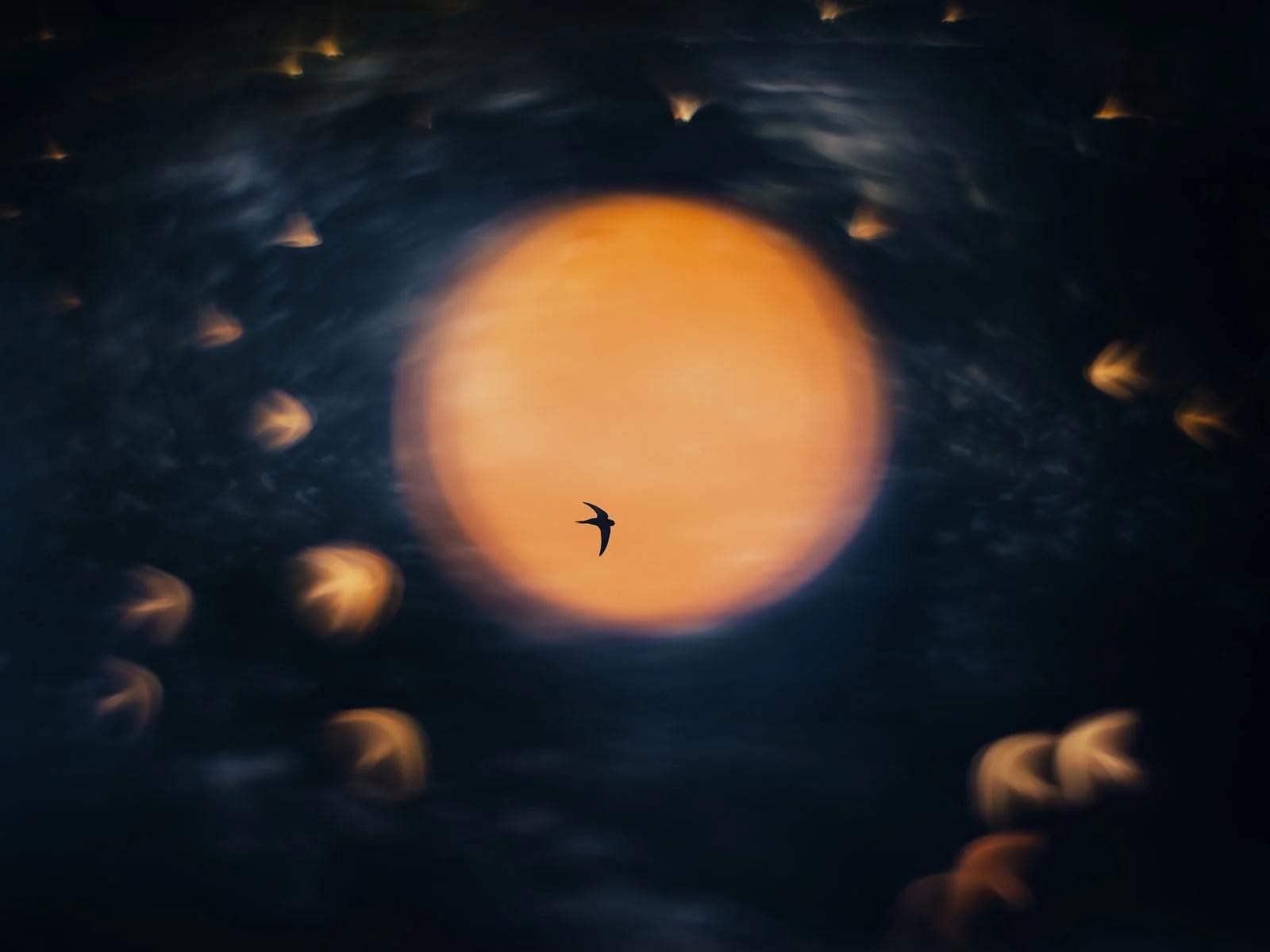
The Nature Photographer of the Year 2025 winners have been revealed, and acclaimed Norwegian photographer Åsmund Keilen has earned the prestigious title, “Nature Photographer of the Year,” for his breathtaking, ethereal photo of a bird in flight against the glowing sun. There were over 4,700 entries from 96 countries.
Not too shabby for someone who is not a professional photographer and has no formal photography education.
Keilen’s incredible photo, “Sundance,” struck a powerful chord with judges. The chairman of the committee, Tin Man Lee, describes it this way:
“At first glance, this mesmerizing image appears to depict leaves adrift in a cosmic sky — but on closer look, each shape reveals itself as a bird in graceful flight. The photographer’s impeccable timing captured a single bird aligned against the glowing summer sun, transforming the scene into a breathtaking moment of stillness and motion intertwined. With its ethereal colors, perfect balance, and otherworldly atmosphere, the image evokes a dreamlike sense of wonder that feels both universal and timeless!”
I felt an immediate gravitational pull towards this image. I so desperately wish real life had this dreamlike quality. But the title of the photo also stunned me. With the recent passing of Robert Redford, I can’t help but think that he is somehow that bird, soaring free over us and offering dashes of inspiration.
The story behind the photograph makes it even more remarkable. The image was taken just outside Oslo on a warm summer day on his way to the grocery store. He has this habit of leaving his coffee cup on the roof of his Mercedes, and that day when the cup fell over (but stayed on the roof), he reached to grab it and suddenly saw the shot he needed to take. Tiny orange birch seeds had fallen overnight on the blue roof of his car, with the summer sun reflecting in them and swifts dancing in the sky above.
Happy little accidents.
Using multiple exposures in his camera, he created this dreamlike image where birds appear to float like leaves against a cosmic sky, with one bird perfectly aligned with the glowing sun.
Keilen describes himself as impulsive, never planning shots in advance. For him, photography is a way of approaching nature, a tool to sharpen the senses and observe with a free mind. It’s exactly what Big Magic and that episode of The Telepathy Tapes reveals: creativity comes to us, not from us. We just have to be present enough to receive it.
The Enduring Appeal of “Working Girl”
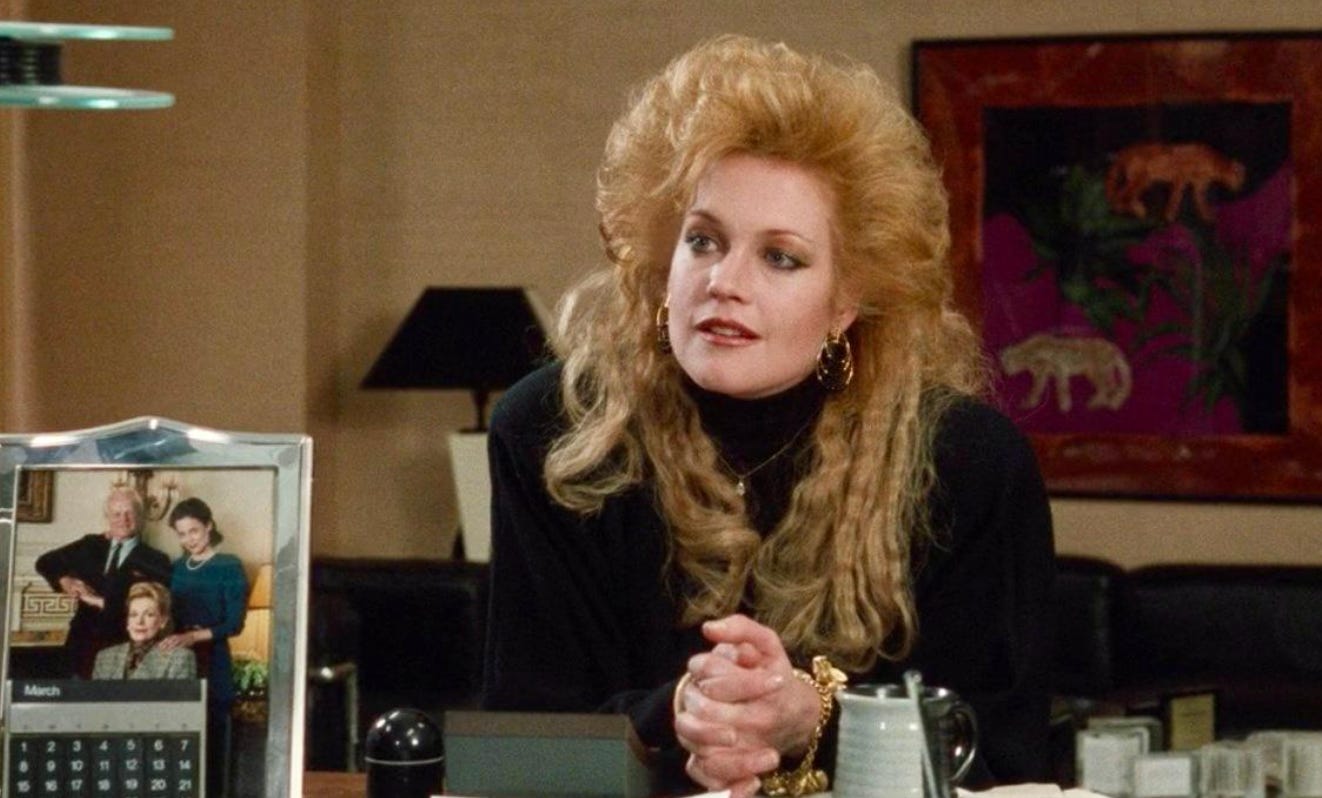
Revisiting Mike Nichols’ 1988 film Working Girl should be an annual tradition for any woman traversing the dangerous jungle of the corporate world. I recently watched this film again, and it hits differently the older I get.
First off, it’s got an intriguing logline:
“When a secretary’s idea is stolen by her boss, she seizes an opportunity to steal it back by pretending she has her boss’ job.
The film nailed something universal about ambition, class, and reinvention while being wrapped in an incredibly entertaining package. It arrived at a moment when women were flooding into corporate America but still hitting concrete ceilings. Melanie Griffith’s Tess was smart, driven, and ultimately stuck because she didn’t have the right pedigree or polish. And so, she had to get creative and bend the rules to find her way. It taps into the real anxieties of class mobility in Reagan’s America, where you were supposed to bootstrap your way up except the old boys’ network still controlled everything.
Has much changed? Has much changed for women?
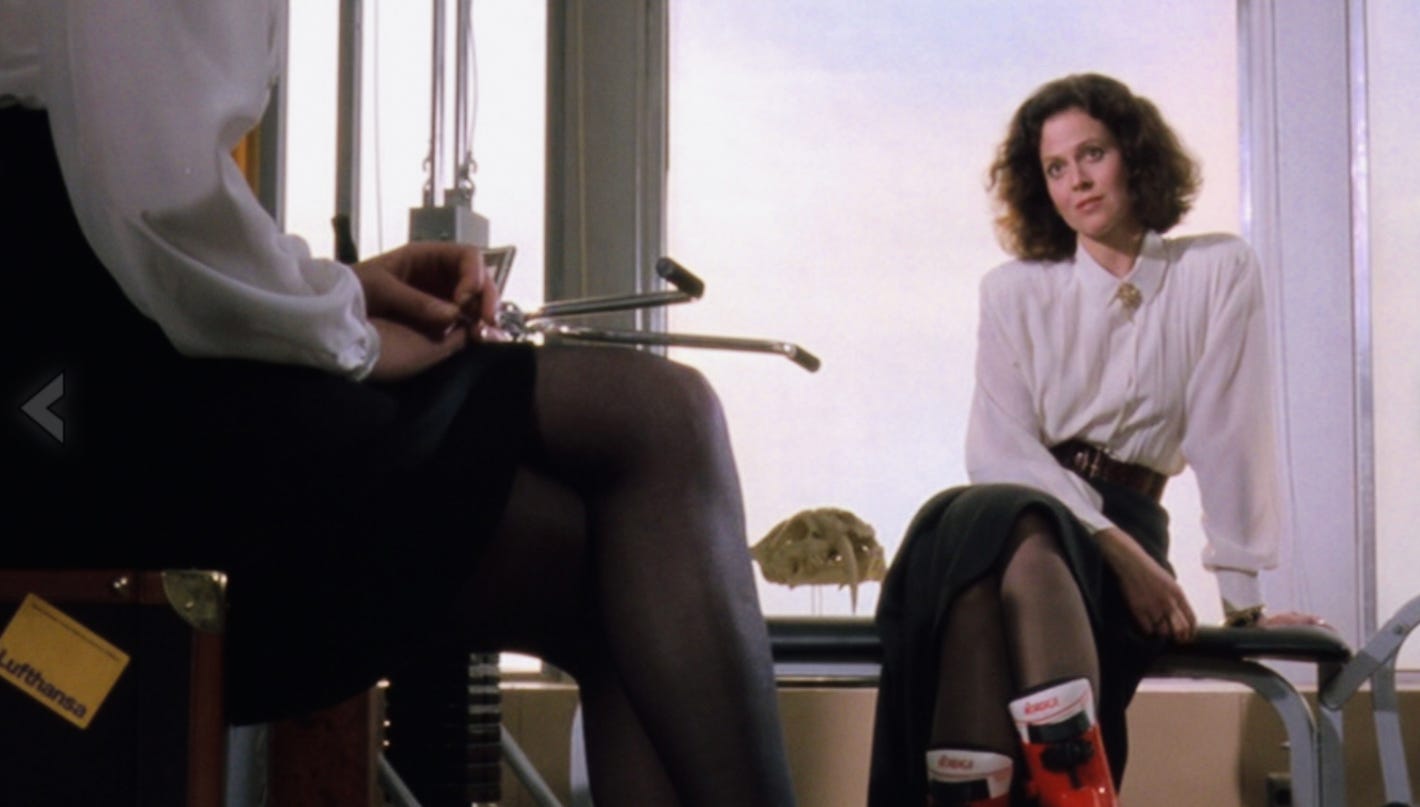
Harrison Ford and Sigourney Weaver were both at peak star power, and Mike Nichols knew how to balance sharp social commentary with genuine romance and comedy. Even though Weaver only had maybe 15 minutes total of screen time, she delivered a memorable performance filled with iconic lines.
The core dilemma hasn’t disappeared—it’s actually gotten more complicated. People’s ideas are constantly being stolen by their superiors. Tess has to perform a certain kind of femininity and class signaling to be taken seriously. Women (especially women of color and working-class women) are still navigating that exhausting calculation daily.
The relationship between Tess and Katharine (Weaver’s villain) is also more interesting than it first appears. Katharine isn’t evil; she’s merely playing by rules that require stepping on other women to get ahead. That “white girl solidarity doesn’t exist in the boardroom” reality still stings.
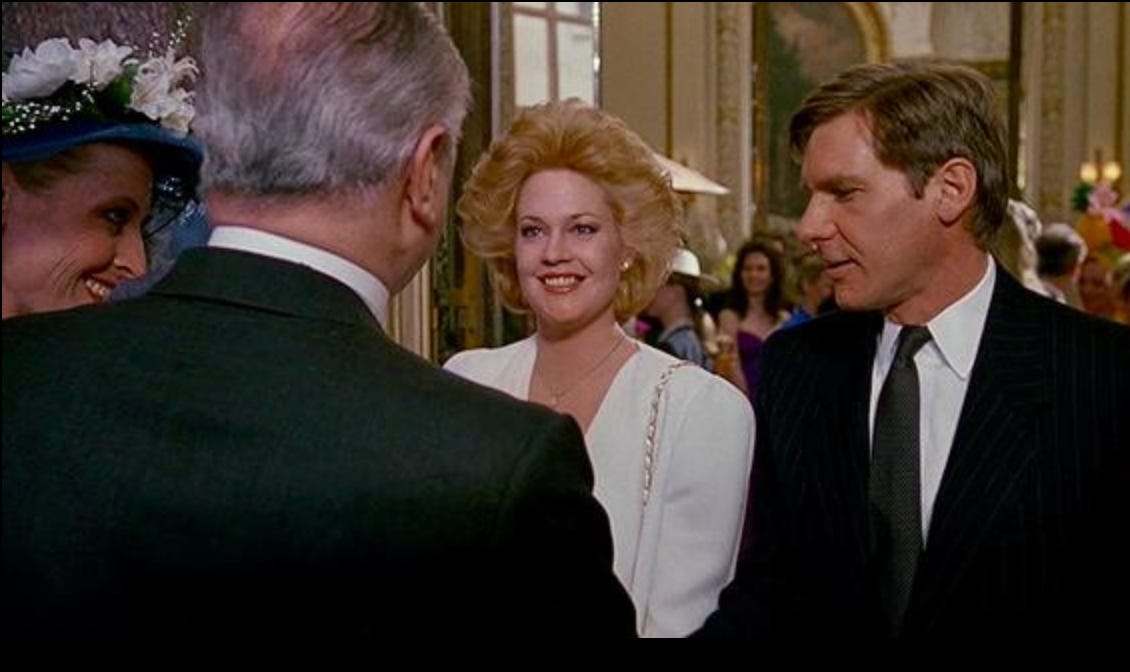
The film has always stayed with me because Tess doesn’t just want money or status; she yearns to be taken seriously for her mind. She wants respect. I appreciate that she never has to choose between ambition and femininity, between being smart and being romantic. She wants it all and gets it all.
And sure, the idea that romance with the right guy solves workplace inequality is a bit ludicrous, but at least Jack respects Tess’s mind first, which is the point.
The Connective Tissue
These creations circle back the unified truth that the best work comes when we stop forcing it and start receiving it. Elizabeth Gilbert and Rick Rubin call it being an antenna. Åsmund Keilen proves it by capturing magic while reaching for a coffee cup. Tess McGill embodies it by trusting her instincts even when the system tells her she doesn’t belong.
As producers, we’re expected to control practically every facet of an uncontrollable creative process. But maybe the real work is learning when to surrender, when to be present enough to catch what’s trying to come through us?
Not to get all Pluribus about it, but maybe the universe is conscious after all and is using us to create something far bigger than we could orchestrate alone.
So here’s to filling our creative well. To being lovers of the craft and loosening the reins on the projected outcome. To fighting for our ideas while staying open to where they want to go.
What’s inspiring you lately?
Keep creating, keep hustling. And as always, thanks for doing this life thing with me!

Couldn't agree more. How do you consitently tap into that creativty? Always so insightful.