

What Even Is a Producer? A History Nobody Asks For (But Should)
Chaplin, Pickford, Disney, and Goldwyn didn't wait for the system to make room for them. Neither should we.

In 2015, the very first project I ever produced world premiered at the Tribeca Film Festival. Autism in Love was a feature documentary exploring how adults on the spectrum navigate romantic relationships. Back then, the festival was in April which coincided with Autism Awareness Month, so we got a lot of press and a lot of love. My entire family flew to New York for the premiere. They were so excited, so proud to see my name in lights.
I remember my dad turning to the person next to him and saying, “That’s my daughter’s film! She directed it!”
Except I didn’t. I produced it.
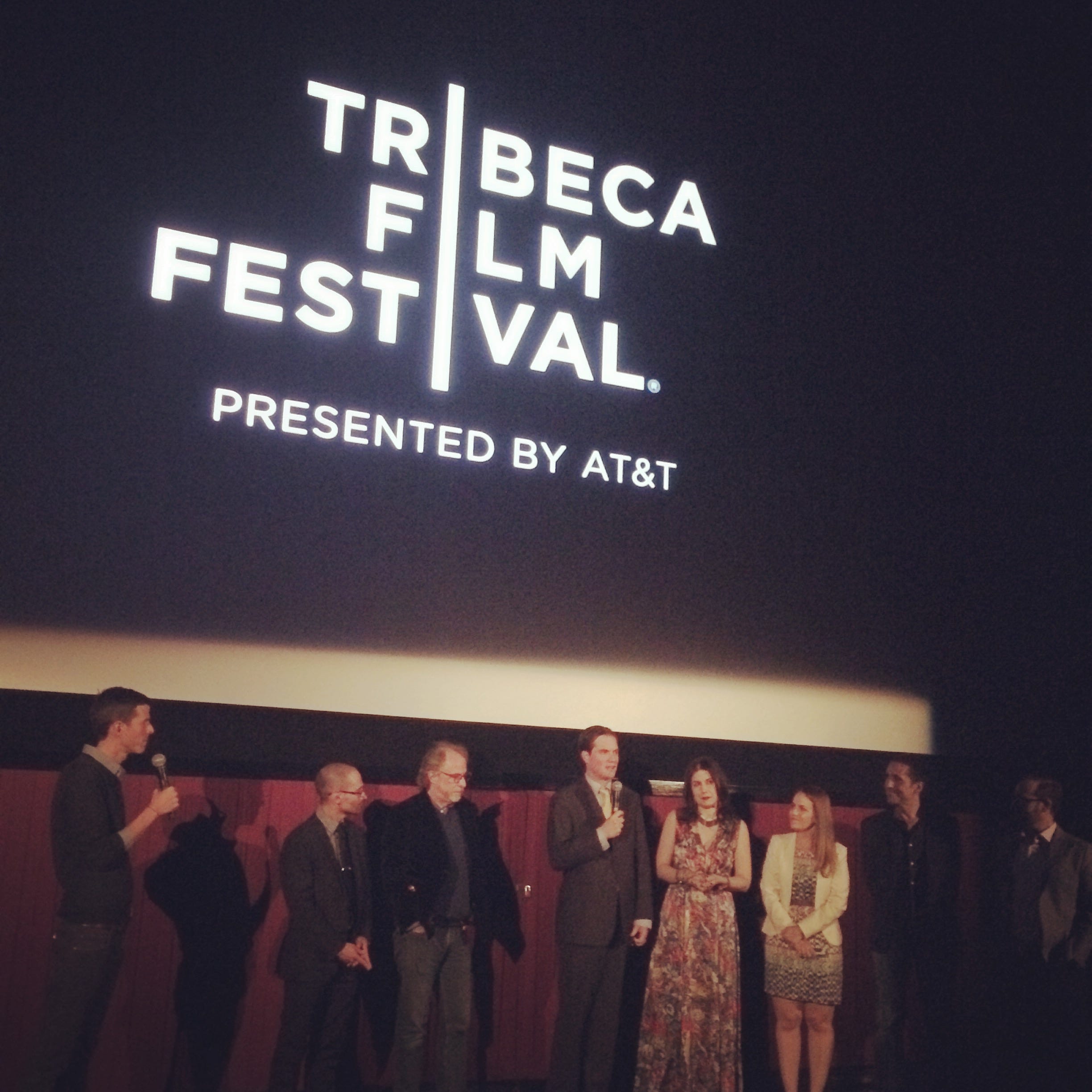
That’s when it first started to dawn on me how little people actually understand about what a producer does. And after years of that same conversation on repeat, at networking events, at family dinners, in casual industry small talk, I decided to channel the frustration into something useful.
In 2018, I launched Angle on Producers, or the podcast formerly known as Life with Caca. My singular goal back then was to talk about the messy parts of life as it pertained to producing, which consumed, and very much was my life back then.
My earliest guests were all in my immediate network and helped demystify what the job actually is, spotlighting the sheer number of career paths under that one deceptively simple word.
Eight years later and I still…get asked. “yeah, but what does a producer actually do?” It seems that even with 165 episodes and tens of thousands of hours logged are still insufficient at getting to the root of it. I don’t blame anyone, though. After almost two decades in this industry, I still find myself pausing before I answer, because the honest answer is: it depends entirely on which decade or slice of Hollywood you’re asking about.
The title “producer” has meant wildly different things at different moments in this industry’s history. It’s been a job description, a power position, a financing mechanism, a vanity credit, and, for a lot of us doing the actual work, a form of blue collar labor that keeps a two-hundred-person circus from collapsing in on itself. More recently, it’s become something else entirely: a launchpad for building your own thing.
So let’s go back. All the way back. Because I think understanding the origins can help us make sense of how we got here and where we may be headed.
Before There Were Producers, There Was Edison
The producer role is actually older than Hollywood itself. Thomas Edison’s company started producing short films in the 1890s out of the Black Maria, a tar-paper studio in New Jersey widely considered the world’s first purpose-built film studio. Edison was, functionally, the first American film producer: he financed the operation, controlled the technology, and decided what got made. Film historians who study this era (David Bordwell, Janet Staiger, and Kristin Thompson’s The Classical Hollywood Cinema is the definitive text) describe how the job of organizing production evolved through distinct systems: first the “cameraman system,” where one person shot, developed, and edited everything; then the “director system” of the late 1900s; and then, as films got longer and companies scaled, something new.
Around 1914, the industry landed on what scholars call the “central producer system.” One person, who was not the director, would plan the entire production in advance via a detailed continuity script and a managed budget, then oversee dozens of films at once. That structural shift, separating the person who manages the making from the person who directs the scenes, is the actual birth of the producer as a distinct job.
Everything since has been variations on that theme.
The Mogul Era: When “Producer” Meant “The Guy Who Runs Everything”
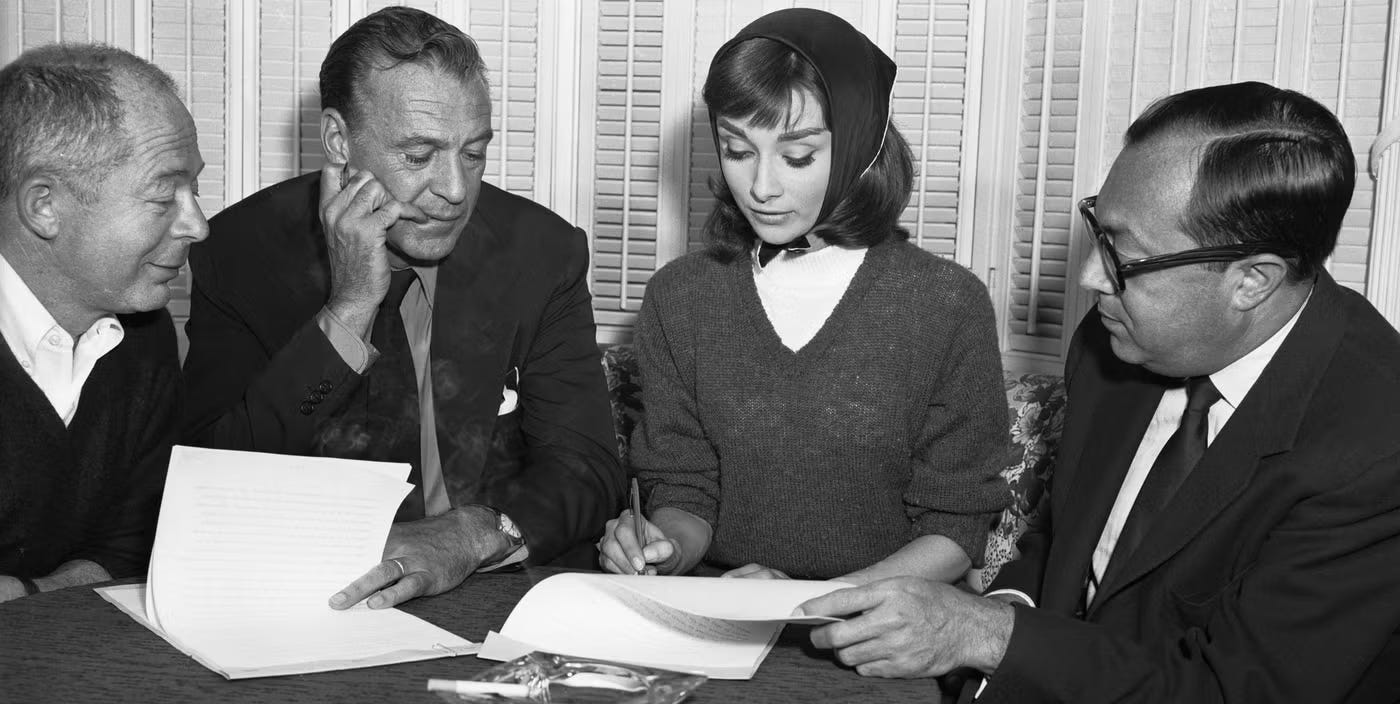
By the 1920s and 30s, the central producer had become a throne. Think Irving Thalberg at MGM, the original “Boy Wonder” who ran production for the studio in his twenties (imagine that!) and supervised its entire slate. Think David O. Selznick, Darryl Zanuck at Fox, Hal Wallis at Warner Bros. These men (and it was almost exclusively men) had creative and financial control over entire slates of films. They picked the material, cast the stars under long-term contract, dictated final cut, and answered to almost no one but the studio head.
Sometimes they were the studio head.
And the whole thing was propped up by an economic structure most people have never heard of: vertical integration. The Big Five studios (MGM, Paramount, Warner Bros., Fox, and RKO) didn’t just make the movies; they distributed them and owned the theaters that showed them. Through a practice called block booking, studios forced theaters to buy their films in bundles, sight unseen, often twenty or more at a time, one A-picture packaged with a pile of B-movies. Guaranteed distribution meant guaranteed revenue, which meant the producer’s job carried enormous power but relatively little financial risk.
The house always won, and the producer ran the house.
This is the era that built our cultural image of “the producer” as a cigar-chomping mogul barking orders in a screening room. It’s not entirely wrong. It’s just about seventy years out of date.
The Breakup: One Supreme Court Case Changed Everything
Here’s the part of the story I wish more people knew, because you cannot understand the modern producer without it.
In 1938, the Department of Justice sued the major studios under antitrust law. And crucially, independent producers helped push that case forward. Charlie Chaplin, Walt Disney, Samuel Goldwyn, David O. Selznick, Mary Pickford, and Orson Welles organized as the Society of Independent Motion Picture Producers (SIMPP) because the studio monopoly was locking them out of theaters. In May 1948, the Supreme Court ruled in United States v. Paramount Pictures that the studios had violated antitrust law.
The studios were forced to end block booking and sell off their theater chains.
The timing could not have been worse for the old system, because television arrived at the exact same moment. In 1948, roughly 90 million Americans went to the movies every week. By 1958, that number had fallen to 46 million. The guaranteed audience evaporated, the guaranteed distribution pipeline was legally dismantled, and the studio contract system collapsed with it. Talent went freelance.
And into that vacuum stepped…you guessed it…the agencies.
This is when “packaging” was born, and it fundamentally rewired what a producer’s job was. Agencies like MCA and William Morris would assemble a director, a script, and a star, then sell that package to a studio for financing and distribution. Film historians call this the shift from the “producer-unit system” to the “package-unit system,” and it’s the world we still live in: every film assembled as a one-off company of freelancers. Suddenly a producer’s core skill wasn’t running a studio. It was assembling elements and securing money which redefined the producer as the dealmaker.
Out of this same period came the independent producer as we’d recognize them now: people who weren’t studio employees at all, who, on spec, found the material, attached the talent, chased the financing, and partnered with a studio only for distribution. It’s the model that gave us the American independent film movement of the 70s, 80s, and 90s, and it’s the lineage most of us working today descended from.
A strange footnote: the Paramount Decrees were formally repealed in 2020 and fully sunset in 2022, on the theory that the old monopoly could never be recreated. Whether the vertically integrated streamers of today would like a word is a whole other newsletter…
Where the Line Producer Comes From
Somewhere in this same evolution, the job started splitting into specialties, because running a production is genuinely too much for one person to do alone once budgets and crews scaled up. The line producer emerged as the person responsible for the physical, on-the-ground execution: the budget, the schedule, the logistics of actually getting a film shot on time and, hopefully, on budget. If the producer is thinking about the deal and the vision, the line producer is thinking about how many trucks you need in Griffith Park on a Tuesday, and whether the AD department has enough PAs to lock down a residential street.
This is a distinction I care about a lot, because it’s also where the labor of producing mostly lives, and it’s a part of the job that gets almost none of the cultural glamour. And since the lifestyle of the capital-P Producer usually means you either come from wealth or you’re stitching together a dozen odd jobs to make ends meet, I pivoted into line producing myself after my capital-P producing experience on Autism in Love. I quickly did the math: over the three years it took to go from idea to screen, I made $30,000 on that documentary. And even though we sold it to streamers, got an Emmy nomination, and received critical acclaim, we never broke even.
That is not a livable wage. It dawned on me that no matter how lean a budget, the line producer will always be paid because production literally can’t afford to make a movie without one. So, I made it my business to learn how to become great at it.
Nobody makes a movie about the line producer. But nothing gets made without one.
And Then Came Television
Here’s where it gets confusing for people outside (and even inside!) the industry: television built its own, almost entirely separate producer hierarchy. It’s the reason “producer” means something different depending on whether you’re on a film set or in a writers’ room.

In TV, the person running the show creatively, breaking story, rewriting scripts, managing the writers’ room, often driving tone and casting, is typically credited as an executive producer, and colloquially called the showrunner. This lineage comes out of the way television was historically financed and staffed: writers were given production authority because the format demanded someone stay creatively consistent across dozens of episodes and multiple seasons, in a way a single film doesn’t require.
So in TV, “executive producer” frequently means “the person actually making the creative decisions,” which is nearly the opposite of how that same title often functions in film, where an EP credit can just as easily mean “person who helped finance this” or “actor’s manager who negotiated a credit.”
And of course, there’s also the non-writing executive producer, typically a title given to a development executive who has pivoted into being a right hand to the showrunner. This person can also come from a physical producing background. Regardless of how they got there, the NWEP is generally a right hand to the key creatives on a show, keeping the whole machine running.
Same word. Two completely different professions, essentially.
And, hold onto that distinction ladies and germs, because this next part? Oh, this next part is reaalllyyy nifty.
The Streaming Era and the Great Credit Inflation
Which brings us to now. If you’ve looked at the opening credits of literally anything in the last ten years, you’ve probably noticed there are sometimes eight, ten, twelve executive producers listed on a single project. This is not because producing got twelve times harder. It’s a byproduct of packaging culture colliding with the streaming financing model. Actors’ companies get an EP credit as part of their deal, financiers get a credit, a book’s original author gets a credit, a podcast IP holder gets a credit.
Some of these people are deeply involved in every creative decision.
Some of them you only meet at the premiere party.
Deal-driven credits are a reality of how projects get financed and IP gets attached in 2026. And because of that, the title has been diluted and a vague signal of what someone actually does. It’s part of why I’ve spent so much of my time on AOP trying to pull the curtain back on what real producing labor looks like.
Everyone wants to be a producer, but few actually want to do the work of a producer.
Why It’s Harder Than Ever to Be an Independent Film Producer
In 2021, Rebecca Green (producer of It Follows and founder of Dear Producer) published the first Producers Sustainability Survey, polling 474 working U.S. producers, all of whom had a producer or “produced by” credit on at least one commercially released feature in the prior decade. These weren’t hobbyists. These were folks who had already been grinding it out for quite some time. And the numbers were brutal: 41% earned $25,000 or less exclusively from producing in 2019, before the pandemic. In 2020, that figure jumped to 56%, with more than a quarter earning under $2,500. Nearly 78% of respondents called for minimum producer fees to even exist.
It’s rare if not a miracle for a producer to get a development fee at all, regardless of how many hours go into a project, because we don’t get paid until official preproduction. There are years of development work, optioning material, attaching talent, chasing financing which are essentially unpaid labor. Producers routinely spend thousands of dollars of their own money just to get a project started. And this isn’t just a U.S. problem: a 2025 survey of UK independent producers found 89% saying the job is not sustainable as it currently exists.
Folks often ask me what is a fair rate to pay a producer for development and it’s honestly an impossible number to estimate. And who elects to pay that fee?
Now contrast that with the TV side. A writer/producer in television is covered by the WGA. There are negotiated minimums, weekly compensation during a staffing engagement, script fees, residuals, health insurance thresholds, a union that strikes on your behalf. A non-writing EP is typically on an overall deal or a negotiated services agreement, salaried against the show. The TV producer ecosystem, though also riddled with it’s own challenges, at least has floors.
Independent film producing has no union, no minimums, no residual structure, and no development compensation.
The Producers Guild is wonderful, but it’s a trade organization, not a labor union, and it cannot collectively bargain. If you’re wondering why many great film producers migrate to television, streaming, branded content, commercials, verticals, or out of the industry entirely, this is why.
It’s not a talent drain; it’s an economics problem that depletes us.
And the economics have gotten worse on the revenue side too. Everyone is well aware that the independent theatrical market has contracted sharply: indie box office shrank double digits in 2024, and independent film’s share of the global box office has been sliding. The streamers who once wrote eight-figure checks at Sundance have largely retreated into making their own originals, and industry analysts have been documenting the collapse of the “Pay One” window, the post-theatrical licensing revenue that used to function as a safety net for independent films. Theatrical windows have compressed from roughly 90 days to 30.
And remember, home video used to be a real business. The rental era of Blockbuster and mom-and-pop video stores, followed by the DVD boom that peaked around $16 billion a year in 2005, gave films a genuine second life and a backend that could turn a theatrical underperformer profitable. Straight to DVD alone was a sustainable model that employed hundreds of people.
All of it, gone.
So the independent producer of 2026 is asked to work unpaid for years, invest their own money, defer their fee when financing gets tight, and then sell into a market with fewer buyers, lower prices, and fewer downstream revenue options than at any point in the modern era.
If the 1948 decision that liberated the independent producer created a swell in the marketplace; then streaming consolidation of the last decade has dried up all those channels.
I don’t say all of this to discourage anyone. We cannot fix a problem people refuse to name and pretending the producer’s path is glamorous is exactly how we ended up with a generation of brilliant producers burning out.
And don’t even get me started on all the mental health implications of this…which I will write about in a future post.
The New Chapter: Producer as Builder

But hey kid. This is Hollywood. It’s the wild west! It’s a place that’s constantly changing and evolving. You either get with the times or you get out. Depressing as it all may be, that exact pressure is producing (pun intended) the most interesting evolution of the role in a hundred years.
For a century, “producer” has been defined entirely in relation to a project. You produce a film, you produce a show, and your identity as a producer exists inside the boundaries of that one credit. But increasingly, producers aren’t just attaching themselves to other people’s IP or waiting on a marketplace that keeps shrinking.
We’re building our own things from scratch: platforms, brands, companies, communities, education businesses, live events. We’re entrepreneurs in the truest sense, people who identify a gap, build the infrastructure to fill it, and figure out how to sustain it financially, often with none of the studio backing the moguls of the 1930s took for granted.
In a strange way, it’s a return to our origins. Chaplin, Pickford, Disney, and Goldwyn didn’t wait for the system to make room for them either. They built United Artists, they built SIMPP, they built their own companies and then sued the system into opening up.
AOP itself is proof of this shift. It started as a response to a gap: the fact that few understood what producers actually do, or the range of paths available under that one title. Building AOP has meant producing in a completely different sense. Producing content, producing a community, producing a business.
It’s the same instinct: find the gap, assemble the pieces, get it made, get it out into the world.
While the role has started to feel limited to a lot of us, even as our actual work has expanded, widening the definition isn’t just semantics. It’s how the industry starts to recognize and value everything producers are actually doing now.
And frankly, given the economics I just laid out, it may be the only way the career survives.
Really Then, What Is a Producer?"
If you force me to give you one definition, it’s this: a producer is the person who makes something possible. Financially, logistically, or creatively, and usually some combination of all three. Everything else, the mogul, the dealmaker, the line producer, the showrunner, the vanity EP, the builder, is just a different flavor of that same core function, shaped by whatever era’s financing model, or platform, or opportunity happened to be dominant at the time.
What hasn’t changed since Edison’s tar-paper studio is that behind every film, every show, every brand, every platform you’ve ever loved, there was someone, often several someones, mostly unrecognized in the culture even when they’re credited on screen, who turned an idea into a scheduled, budgeted, built, actually-happening thing.
That’s the job. It always has been. Or would you define it differently?
Thanks for reading and as always, thanks for doing this life thing with me!


Resources
If you want to go deeper, these sources worth your time:
On the history:
The Classical Hollywood Cinema: Film Style & Mode of Production to 1960 by David Bordwell, Janet Staiger, and Kristin Thompson.
The National Constitution Center’s overview of the Paramount case and its aftermath
The SIMPP Archive, a deep independent-producer history of the antitrust fight.
The Genius of the System: Hollywood Filmmaking in the Studio Era by Thomas Schatz.
On the state of independent producing today:
The most useful distinction here is producer as credit versus producer as decision owner. On a live job, that labor becomes visible when every scope, schedule, and budget change carries four things: the decision, its owner, a timestamp, and the financial consequence. That does not solve unpaid development, but it stops operational producing from disappearing into “somebody handled it.” We’re building Production Engine around that record and inviting working producers to pressure-test one paid field test—not provide a free testimonial: https://production-engine.com/production-resources/design-partner?utm_source=angle_on_producers&utm_medium=substack_comment&utm_campaign=production_engine_revenue_loop_5000_2026_q3&utm_content=producer_decision_owner_record Disclosure: Production Engine product team.