

Are We OK?
On mental health, the contraction, and who's left to pull up the next generation.

Over the last few months, most of my encounters or catch-ups with industry friends and colleagues who’ve been in the trenches of this business have left me concerned. Once we get past the surface stuff, the project updates and the “staying busy” theater, the truth about how much folks are actually struggling, financially, mentally, or both, comes to light.
People are taking out a second mortgage on their house. Draining their 401k to pay rent. Moving back in with their parents in their 40s. These are not folks on the margins of this industry. These are producers, high level writers, executives, department heads with impressive credits and deep relationships.
And almost all of them are extremely embarrassed by contending with this reality.
It honestly breaks my heart. Feeling debilitated by things outside of our control is one thing, but the embarrassment, which deeply impacts ego, self-esteem, and maybe even self-worth, is quite concerning. People seem to be bearing the burden of a structural collapse as if it were a personal failure, grieving alone behind a curated feed, convinced they’re the only one drowning.
I imagine the majority of this town is having the same conversation in one way or another.
So, I wanna ask you.
Are you OK?
Are we OK?
I don’t think we are.
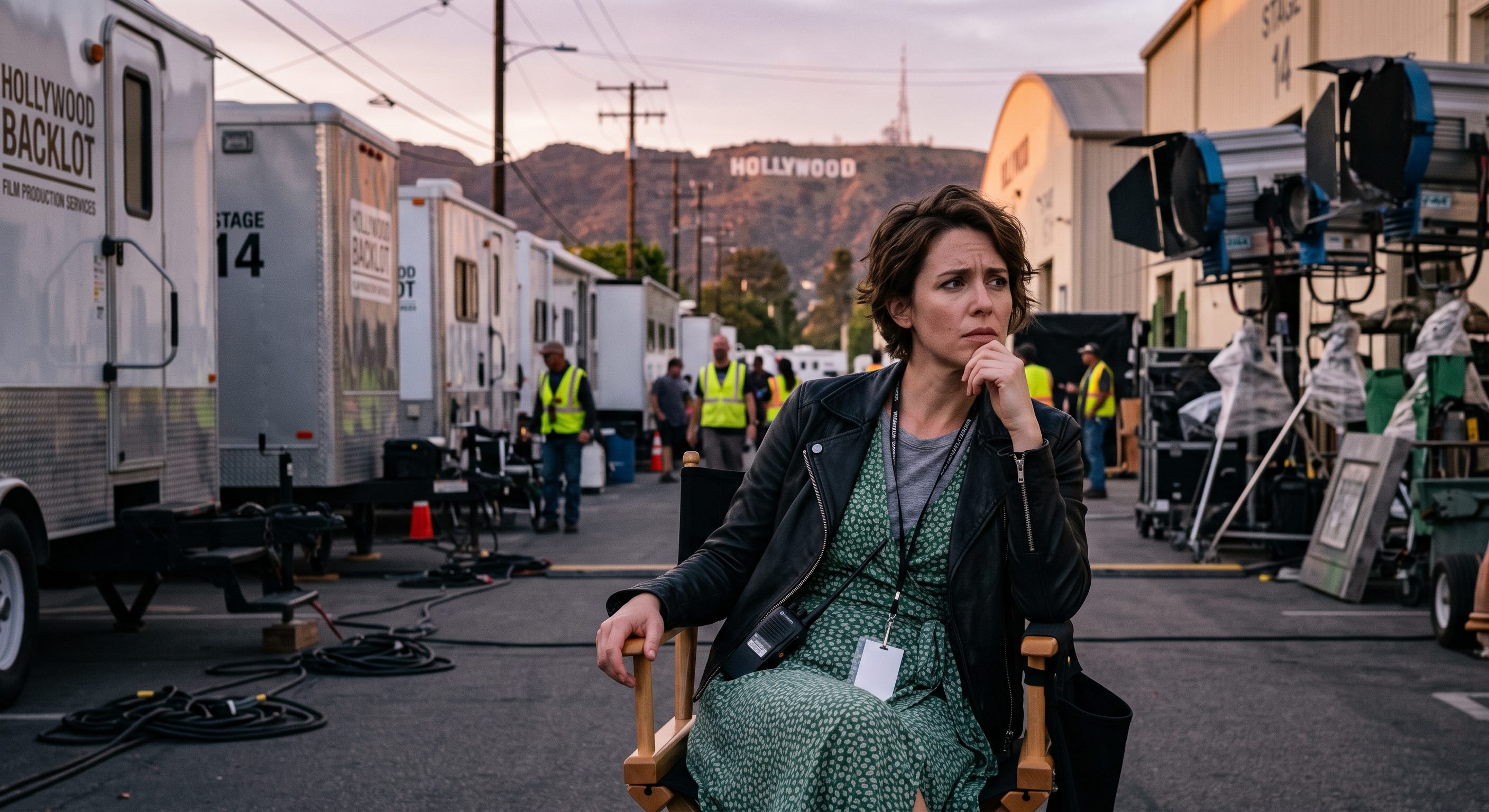
The Side Effects of the Last Three Years
This industry has never been easy; we all accepted that deal at some point, willingly or not. But what’s happening right now is not the normal churn of a tough business. It’s a structural collapse, and the numbers back up what every one of us feels in our bones.
National employment in motion picture and sound recording has fallen from roughly 455,000 jobs in mid-2022 to about 337,000 by early this year1. LA County alone lost 42,000 entertainment jobs between 2022 and 2024, nearly a third of the local workforce 2. Shoot days in Los Angeles have been cut in half since 2022. And even with the boost in local production thanks to the tax credit, it’s still not enough to employ the thousands of talent, crew, and vendors who have been out of work for far too long.
Layer on top of that the mergers and consolidation. Every acquisition means “redundancies,” which is a code for thousands of careers ending in a single memo. The entertainment and media sector cut over 17,000 jobs in the first eleven months of 2025 alone, an 18 percent jump over the year before3.
And then there’s AI. Not the theoretical version debated on panels two years ago, but the version that’s here now, reshaping how many people it takes to make a film while simultaneously screening the résumés of the people it displaced.4 This isn’t just a feeling, either. Stanford’s Institute for Human-Centered AI found that roughly 90% of U.S. employers now use AI tools to sort and rank job seekers, and a 2026 SHRM survey of nearly 1,900 HR professionals found that 19% of organizations using hiring automation admitted their own tools had screened out qualified applicants5.
I know so many brilliant folks, predominantly women, trying to pivot into adjacent industries who can’t get past that filter. Almost two decades of producing means you can run a P&L, manage a hundred-person team, negotiate vendor contracts, and deliver under impossible deadlines. But an algorithm scanning for keywords sees “film” and moves on.
The machine can’t see transferable skills; only what it was trained to look for.
